
10-Dec-2025
Presto Instruments
Export shipments move through long routes, rough handling, and changing climates. Corrugated boxes face heavy stacking loads in warehouses and in containers. Many brands ship to GCC countries (the United Arab Emirates, Saudi Arabia, Qatar, Bahrain, Kuwait, and Oman), where heat, humidity, and long transport routes add even more pressure on packaging. Strong corrugated boxes matter here. A soft or poorly made box starts to sink in, bend out of shape, or give way when other boxes sit on top. Goods get squeezed, shipments get turned back and stock gets ruined.
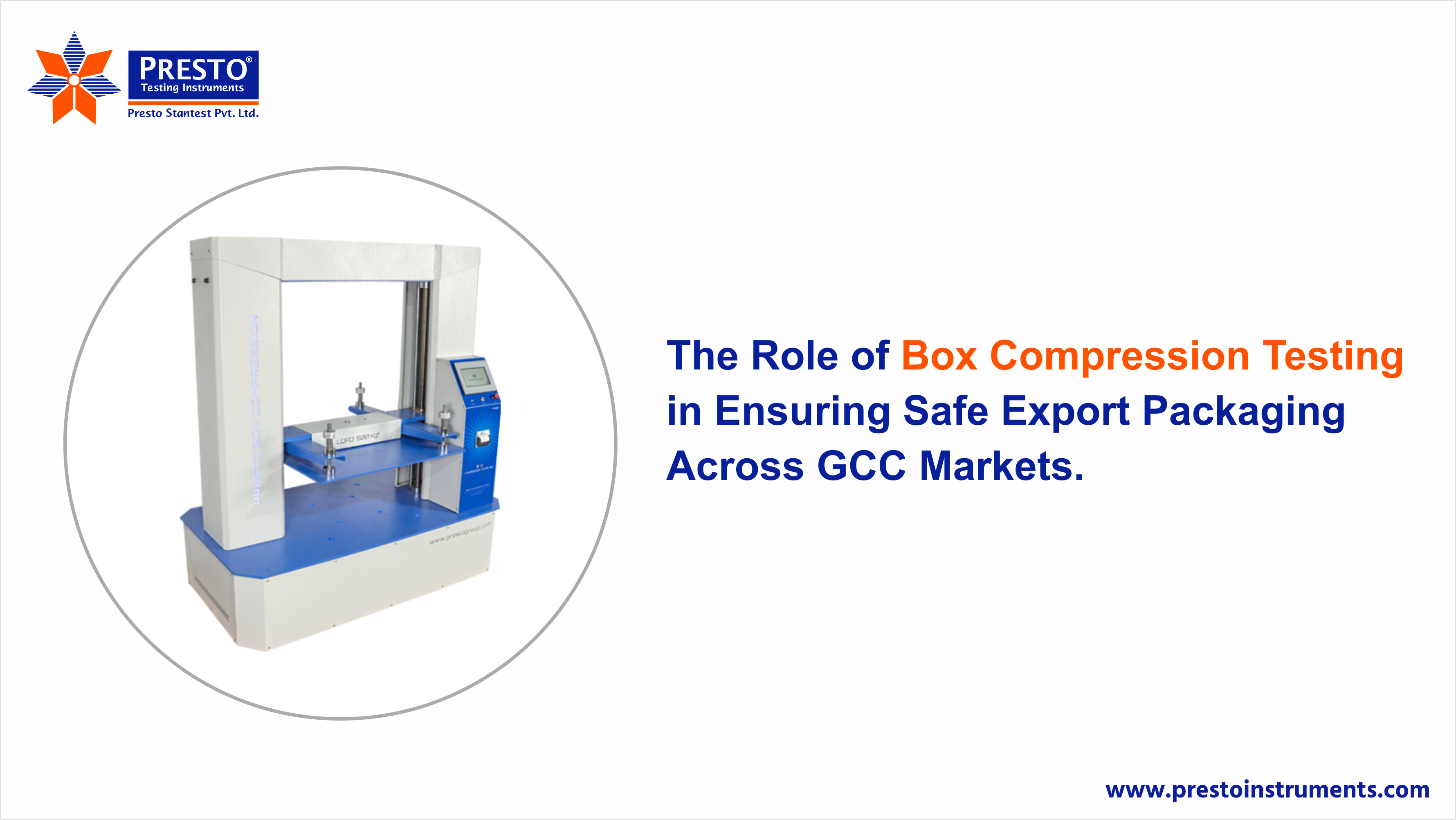
A computer-based compression check shows how much weight a box can handle. The numbers make it simple for teams to pick the flute, board, style, and size that suit long routes. They can also compare different suppliers and spot cartons that fall short. Presto instruments offers a computerized box compression tester that helps brands work with steady results, clear graphs, and real-time load curves.
1.Stack Pressure
Export packs sent to Gulf countries move through many storage and travel points. Boxes may stay stacked for long hours in ports. They travel through hot weather and face vibration during long routes. A box compression test shows how the box reacts under load. It tells teams the weight the box can take before it bends.
2. Carton Stability
This helps brands avoid collapse. It helps teams match carton strength with product weight. Many exporters place boxes in tall stacks inside containers. One weak carton at the bottom can tilt the full stack. Carton walls can fold under stress. A compression test gives a clear idea of safe stacking load.
3. Heat Effect
Shipments for GCC regions often face higher heat. Heat reduces fiber strength. Corrugated boards lose stiffness. A simple visual check does not reveal this shift. A compression test gives a true load reading even when board strength changes due to heat or supplier variation.
4. Mixed Shipments
Large exporters often deal with different carton types. One shipment may carry consumer goods. Another may carry electronics, food containers, or machine parts. Each needs the right carton grade. A compression test helps teams judge the right board quickly. It also helps them change suppliers during busy months without fear of weak packs.
5. Brand Trust
Damaged cartons affect buyer confidence. Exporters want steady stacks at every point. A compression test helps packaging teams create cartons that stay firm during warehouse storage and long container travel. This supports a smoother export flow.
Features Of Box Compression Testing Machine for UAE, Saudi Arabia, Oman & Qatar
The computerised box compression Digital testing for Saudi Arabia from Prestoinstruments helps teams measure carton strength with smooth, controlled platen movement. It works with a motor-driven system that applies load from the top. The load cell reads the force with clear accuracy. The software tracks the entire load pattern and shows it on the screen.
The operator can see the rise in load, the moment stiffness drops, and the peak value. The readings remain steady because the speed stays fixed. This removes variation linked to manual testing. Saved reports help with audits, supplier checks, and buyer approvals. The unit suits day-to-day plant use due to its stable frame, limit switches, and simple software setup.
Conclusion
Strong export packing often comes down to how well a carton holds its shape under pressure. Box compression testing helps the brands to send goods to GCC regions with more peace of mind. The computer based tester from Presto instruments gives teams clear readings, simple graphs, saved records, and an easy test flow. With this support, exporters choose carton styles that stay firm during long trips and harsh weather. The result is safer arrivals and fewer damaged loads.
FAQ
1. What does a box compression test show for export cartons?
A box compression test shows how much load a carton can take before bending. Export cartons face long storage, stacking, and heat. The test helps brands check the safe load level. It also helps them match carton strength with the product weight.
2. Why is computerised testing better than a manual unit?
A computerised tester records the full load curve. It shows the exact point where the carton starts losing stiffness. The digital system removes operator variation. The platen speed stays steady. This gives a clearer reading for export cartons where even small strength changes matter.
3. How does heat in GCC regions (Bahrain, Kuwait, Oman, Qatar, Saudi Arabia, and the United Arab Emirates) affect corrugated box strength?
Heat affects fibre stiffness. Corrugated boards lose firmness in high-temperature climates. This is common in GCC ports and storage points. A compression test shows the true load strength even when the board weakens due to heat or moisture.
4. Can computerized reports help during buyer approvals?
Yes. Many global buyers ask for carton strength reports before allowing shipment. The computerised tester stores readings and graphs. Brands can use these reports during audits and approvals. It also helps them show steady packaging quality over time.
5. How often should exporters test their cartons?
Regular testing helps exporters track carton strength during season changes, supplier changes, and climate shifts. Many large units test each new batch. Some tests are done weekly. A computerised tester makes this easy through repeatable readings and saved reports.
Elevate your quality assurance process to new heights
At Presto, we take pride in being Global manufacturers of Laboratory Testing Instruments for different industries.