
25-Dec-2025
Presto Instruments
Packaging used across Saudi Arabia and the UAE faces a tough journey. Heat rises quickly, humidity shifts near coastal areas, and long road movement puts pressure on every carton. A box that feels firm at the start can weaken after hours of transport. Many companies in these regions manage crushed corners, dented cartons, or collapsed stacks during storage. These issues often begin at the paper level. That is where Ring Crush Testing steps in. It checks how well the paper stands when pressure builds from different directions. Strong readings bring more confidence during shipping and handling.
The RCT test observes the pressure a paper sample can take before it collapses. The sample is shaped like a ring and pressed from all sides. This small action gives a clear picture of fiber strength. A stable RCT value means the paper will face stacking loads with fewer chances of buckling. A good ring crush tester gives consistent readings, so every batch stays steady. Many packaging lines rely on this value to judge whether the paper is strong enough for heavy-duty cartons used in hot and dry conditions across Riyadh, Jeddah, Dubai, and Abu Dhabi. A high value suggests that the carton will stay firm even when temperatures fluctuate.
The climate in Saudi Arabia and the UAE adds stress to packaging materials. These regions face tremendous heat due to their geographical location. Heat softens the paper fibers. Moisture in coastal regions changes the stiffness of the board. Boxes stacked in warehouses face long hours of weight. Cartons used for food, cosmetics, e-commerce goods, and industrial shipments go through constant movement.
When the paper is weak, boxes lose their shape, and the products inside get damaged. That creates customer complaints, return losses, and shipping delays. Testing becomes a basic step for factories and exporters who want their boxes to stay firm from start to finish. This is why a strong RCT value holds great importance in these markets.
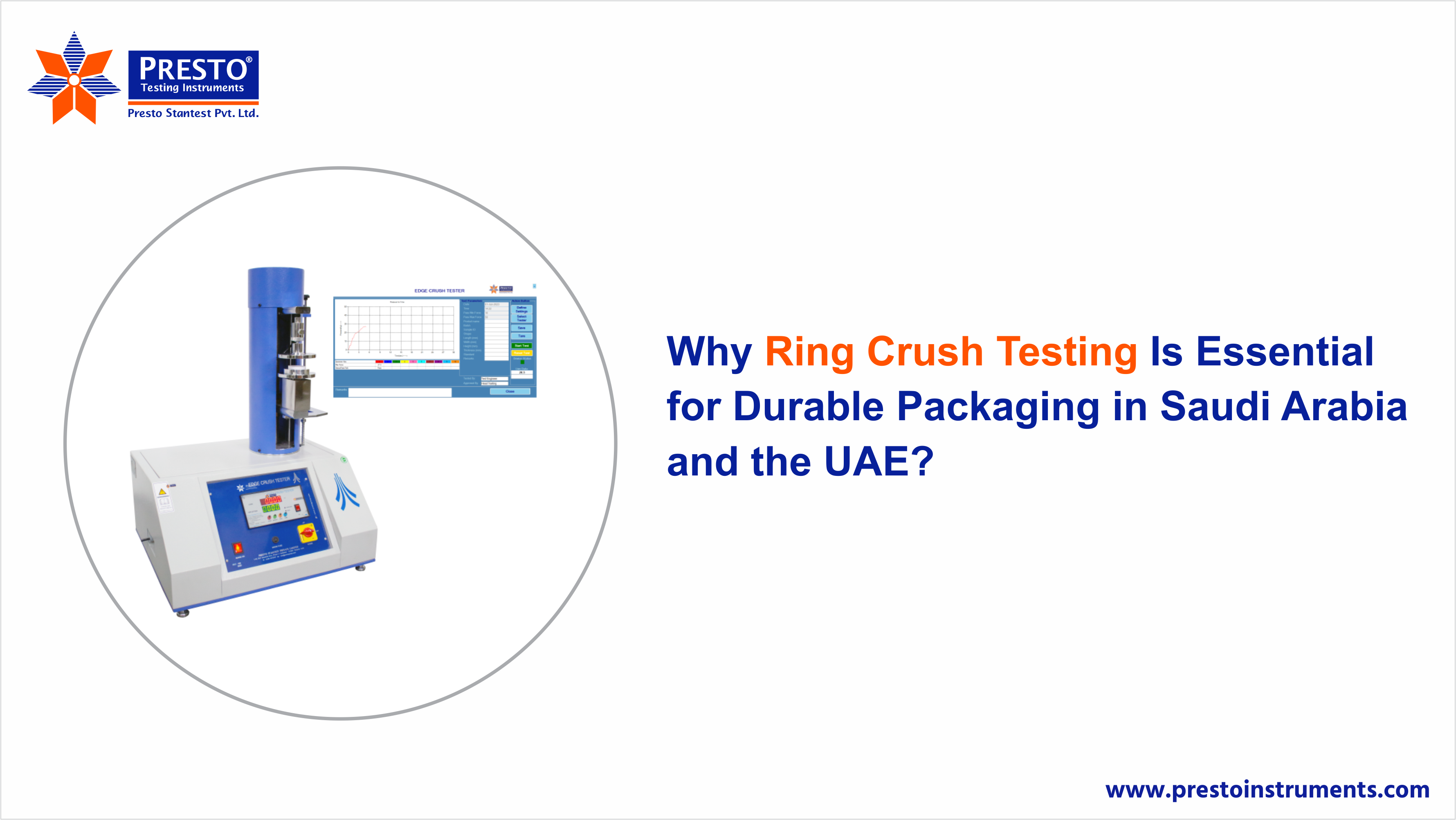
Packaging makers also use an Edge crush tester along with RCT testing. RCT shows the strength of the paper. ECT shows the strength of the full corrugated board. When the RCT value stays high, the fluted layers remain stiff. When the ECT value stays high, the board handles vertical pressure with more stability.
Together, these values guide box design. They tell packaging teams whether the carton will hold up during real-world use. Strong readings mean fewer surprises during transport and storage. Weak readings show that the material needs attention before boxes move into production.
Boxes used in the Gulf regions deal with far more changes than expected. They may stay in the sun at loading points. They may shift from air-conditioned rooms to warm outdoor areas within minutes. They may experience bumps during transport on long highways. All these shifts test the strength of every fiber inside the paper. A high RCT value helps the paper stay firm even when the climate changes suddenly. Factories that track this value avoid issues like sagging cartons, split edges, or collapsed stacks during long hauling.
Quality teams often run RCT checks when raw materials arrive from suppliers. Some factories test every roll before it enters the corrugator. Others follow shift-wise routines. The goal stays simple. They want to spot weak material early, prevent low-grade sheets from entering production, and keep each batch of cartons stable. When companies use their ring crush tester daily, they catch fiber changes faster and prevent large-scale waste. It keeps the packaging line smoother with fewer unexpected complaints from customers.
The RCT value only helps when the readings stay steady. A good ring crush test machine gives uniform pressure during each test. It shows clear digital values so teams work without confusion. When the machine stays accurate, factories produce stronger corrugated boxes with less chance of errors. A poor machine can mislead the team with shifting readings. That leads to material strength problems later, even when everything looks fine on the surface. A stable machine is the heart of a strong testing routine.
Presto Instrument supports packaging units in Saudi Arabia and the UAE with testing machines built for daily industrial use. Their ring and edge crush tester models are known for smooth pressure application and clear digital readings. The design stays simple so operators work with comfort during busy shifts.
The machine helps companies test incoming paper quickly, detect weak fibers before production, and maintain strong carton strength for export shipments and local distribution. This support becomes useful for corrugated box makers, kraft paper suppliers, converters, and logistics packaging units that handle heavy loads and long travel conditions.
Conclusion
Strong packaging protects products during long journeys across hot and shifting climates. Saudi Arabia and the UAE rely on steady quality to keep supply chains running without trouble. Presto Instruments Ring Crush Testing helps companies understand the true strength of their paper before it becomes a carton. A solid Ring Crush Tester in UAE or Saudi Arabia brings confidence during production and reduces the risk of collapsed boxes. When factories use the right machine and follow a steady testing routine, their packaging stays firm from start to finish.
FAQs
Elevate your quality assurance process to new heights
At Presto, we take pride in being Global manufacturers of Laboratory Testing Instruments for different industries.