
05-Mar-2026
Presto Instruments
Plastic films rarely get attention until something goes wrong. A pouch tears while sealing. A wrap stretches too much on the line. A label film snaps during application. In Sri Lanka, where plastic films are used for packaging, agriculture, and everyday products, such problems cost time and material. ASTM D882 02 exists to catch these issues early. It is concerned with the behaviour of thin plastic films when they are pulled, stretched, then pushed near the edge, long before they actually come into real use.
It is a testing standard that is used to analyse the behavior of plastic films under stress. It simply measures the strength of a film in a simple way and the extent to which a film can go before it breaks. The test is not associated with complex arrangements. One pulls a narrow strip of film until it breaks. In the process, the forces and stretch are measured.
This is done to thin films and sheets, rather than thick parts made of plastic. It suits well with the materials that are used to package, wrap, and in the flexible covers that need to be stretched daily.
Plastic films face stress more often than people realize. They are pulled during sealing. They stretch during wrapping. They tighten during transport. Even slight tension differences can change the reaction of the film.
Without tensile testing, manufacturers rely on visual checks or past experience. That works until a new batch behaves differently. Tensile testing shows how a film responds under load. It highlights weak points early. This helps teams avoid surprises during production.
In Sri Lanka, where the films are applied in food containers, consumer products, and in agriculture, this type of testing facilitates easier operations and eliminates last minute corrections.
The test focuses on a few key behaviors.
One is tensile strength. This shows how much pulling force the film can handle before it breaks.
Another is elongation. This tells how much the film stretches before failure.
Some tests also observe when the film starts to deform permanently. This helps understand whether a film will stretch back or stay distorted after stress.
Together, these results give a clear picture of how a film will perform during real handling.
A film sample is first cut to a defined shape and size. Care is taken to avoid uneven edges, as thin films are sensitive.
The sample is put between two grips of a tensile testing machine. The film is clung to these grips without being damaged.
The film is then drawn by the machine at a constant speed. The more the film extends, the more force readings rise. Eventually, the film breaks. The machine captures the values in the process.
The whole test can be completed in a very short period of time, and the information acquired is very helpful.
Plastic film use in Sri Lanka spans multiple industries. Food packaging needs films that seal well without tearing. Agricultural films must handle tension from wind and handling. Industrial wraps must stay intact during transport.
Local weather conditions also matter. Heat and humidity can affect how films behave. Testing films under a standard method helps manufacturers understand performance before materials face real conditions.
For companies supplying both local and export markets, standards-based test data also builds confidence with buyers.
Packaging units use this test to check films for pouches, sachets, and wraps.
Agricultural film producers rely on it for mulch films and protective covers.
Label and tape manufacturers use it to reduce tearing during application.
Industrial users test films used for surface protection and pallet wrapping.
In each case, tensile testing helps match material behavior with actual use conditions.
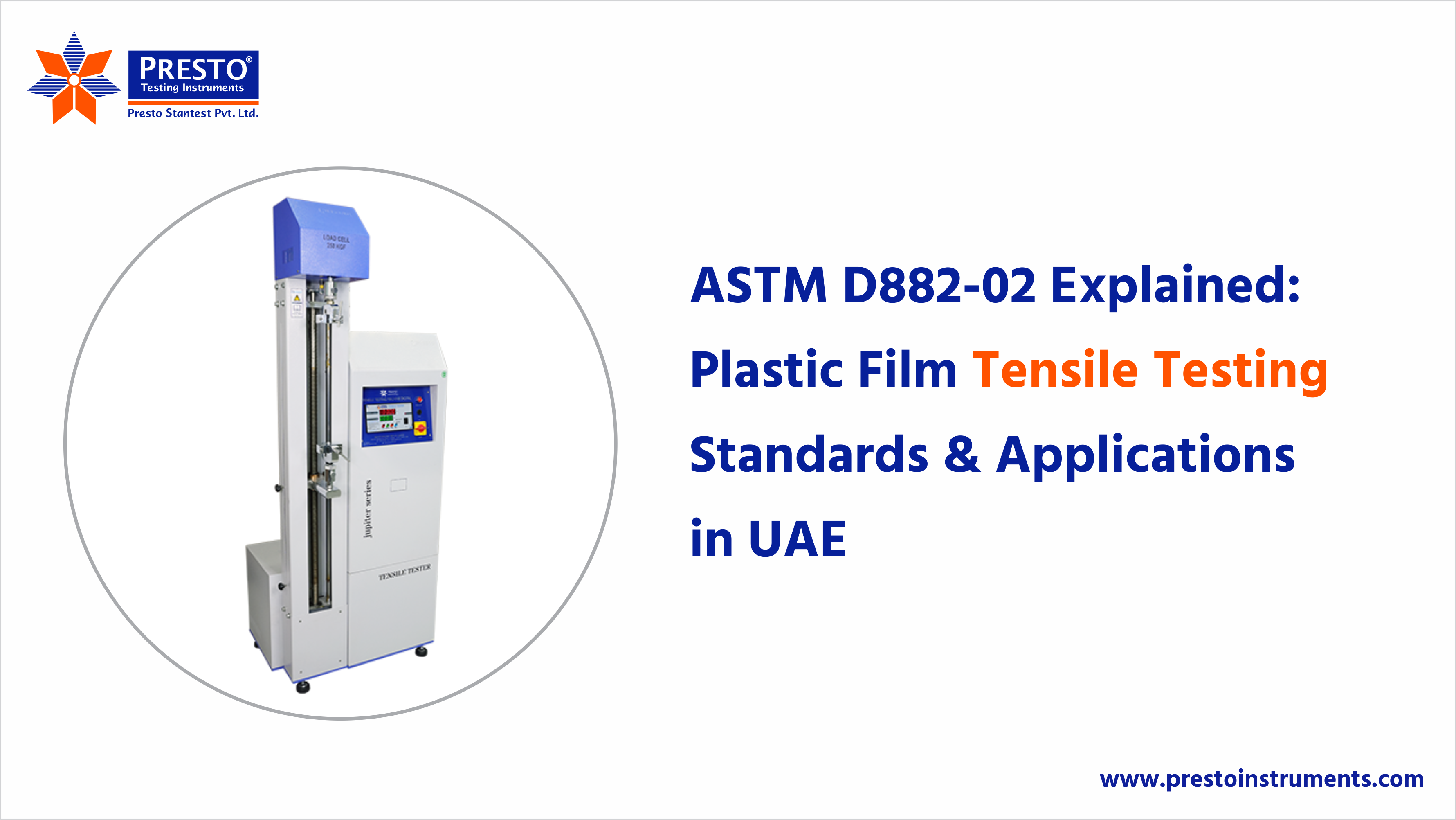
Presto Instruments supports plastic film testing by offering tensile testing machines designed for flexible materials. Thin films require careful gripping and smooth force application. Equipment that is not suited for films can cause slippage or early tearing.
With the right setup, teams can run regular checks without slowing down production. Clear readings make it easier to compare batches and materials. This supports daily quality checks as well as development work for new films.
When tensile testing is ignored, problems often appear late. Films may pass visual inspection but fail during sealing or transport. Fixing such issues after dispatch leads to returns, delays, and extra costs.
In competitive markets, even small quality issues affect reputation. ASTM D882 02 helps catch problems when they are still easy to fix.
ASTM D882 02 provides manufacturers with a realistic method of studying the deformation of plastic films when subjected to tension. In the case of industries in Sri Lanka, the test facilitates improved material selection, reduced production hitches, and consistency in the quality of the products. By measuring strength and stretch before films are used, teams gain clarity instead of assumptions. Presto Instruments supports this testing process with equipment suited for thin films and real production needs, helping manufacturers stay prepared rather than reactive.
Q. Is this test only for packaging films?
Ans. No. It is also used for agricultural films, labels, tapes, and industrial wraps.
Q. Why is tensile testing important before production?
Ans. It reveals weaknesses early, before films reach sealing lines or customers.
Q. Does film thickness affect test results?
Ans. Yes. Thicker and thinner films behave differently, which is why testing is important.
Q. Can this test reduce customer complaints?
Ans. Yes. Films that pass tensile checks are less likely to tear or stretch unexpectedly.
Q. How does Presto Instruments support this testing?
Ans. Presto Instruments offers tensile testing machines designed for flexible and thin materials, supporting routine quality checks.
Elevate your quality assurance process to new heights
At Presto, we take pride in being Global manufacturers of Laboratory Testing Instruments for different industries.