
15-May-2026
Presto Instruments
South Africa's manufacturing and industrial sector has continued to grow in the packaging, plastics, mining, automotive, building, cables, and infrastructure sectors. With growing competition in the export market and higher standards of production, manufacturers are looking at quality assurance and validation of materials before products go to the market.
This growing industrial demand has increased the importance of the universal tensile machine (UTM) in the South African market. Industries today require advanced laboratory systems capable of evaluating tensile strength, compression resistance, elongation behavior, peel strength, and structural durability under controlled testing conditions.
Manufacturers also prefer systems that support multiple testing procedures through one platform because it improves laboratory efficiency and reduces operational complexity. This is why many industries actively search for dependable universal testing machine (UTM) suppliers in South Africa and experienced universal testing machine manufacturers that can support calibration, technical service, and standards-based testing.
Industries also compare normal tensile machine prices in South Africa and UTM testing machine prices in South Africa options carefully because machine quality, software integration, and after-sales support directly influence long-term laboratory productivity.
1. Packaging Industry
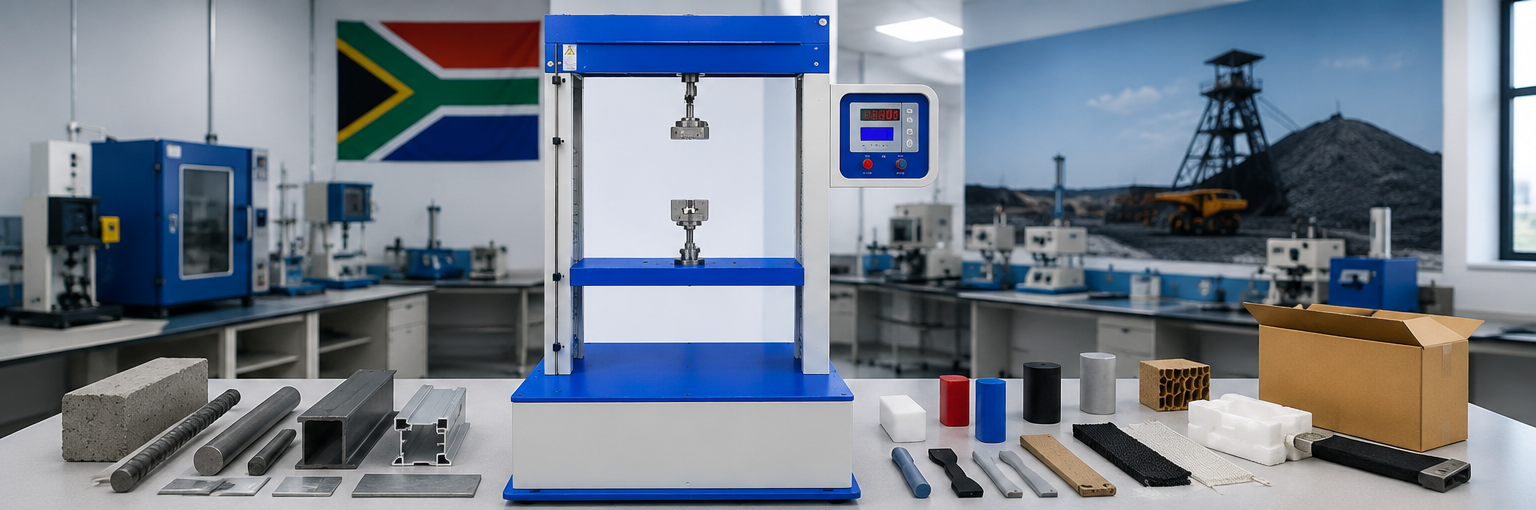
The packaging industry is one of the largest users of universal tensile testing machines in African systems. These machines are used by flexible packaging manufacturers, rigid packaging suppliers, and industrial packaging companies to gain insight into the strength of packaging materials and their sealing abilities.
Packaging products should survive the transportation, storage, and handling. Leaks, contamination, and product rejection can occur due to films, laminates, or seals being compromised in any way. Industries, therefore, use a universal tensile machine. South Africa's systems for evaluating
As export quality requirements continue to rise, packaging manufacturers increasingly invest in advanced testing systems for better product consistency and international compliance.
2. Polymer and Plastic Industry
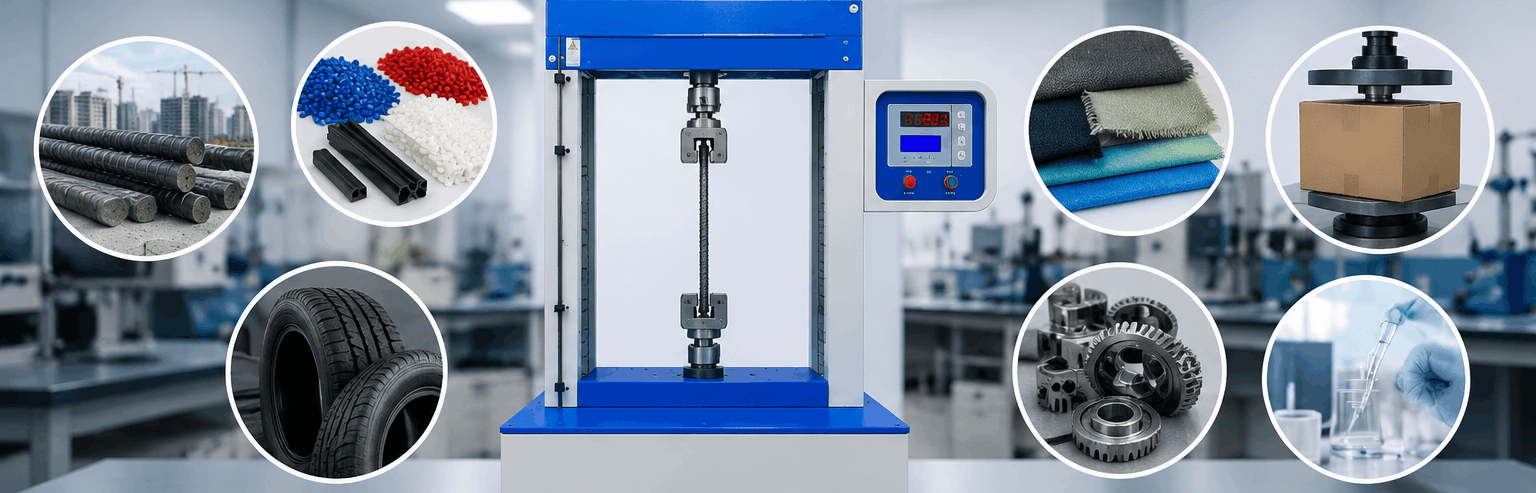
The polymer industry is one of the most expanding industrial industries in South Africa. Unfavorable testing machines for plastic are used largely by plastic processors, polymer compound manufacturers, and injection molding companies, as well as by extrusion companies.
Testing is performed to ascertain the behaviors of polymer materials when mechanical stresses are applied to them. Material inconsistency may impact the durability, flexibility, dimensional stability, and longevity of the product.
A universal testing machine used for polymers is commonly used to study polymers:
Many industries now prefer automated testing systems with digital controls because they improve testing accuracy and reduce operator dependency.
3. Automotive Industry
South Africa’s automotive industry continues to grow through vehicle assembly operations, component manufacturing, and export-driven production. Automotive manufacturers depend on universal tensile testing machine systems in Africa for evaluating various components exposed to continuous operational stress.
Testing is conducted on:
Automotive companies require testing systems capable of generating repeatable results because safety and durability remain critical in vehicle manufacturing.
Industries also work closely with experienced universal tensile tester suppliers in African companies because calibration accuracy and standards compliance directly affect production quality.
4. Mining Industry
Mining remains one of South Africa’s largest industrial sectors. Mining operations require heavy-duty materials capable of withstanding high mechanical loads, abrasion, vibration, and environmental stress.
Mining industries use UTM systems for testing:
Testing helps manufacturers evaluate material performance before products are deployed in demanding mining environments. This reduces operational failures and improves worker safety.
Mining companies often prioritize long-term durability while evaluating universal testing machine prices because industrial testing systems must operate continuously under demanding laboratory conditions.
5. Construction and Infrastructure Industry
Construction industries rely heavily on material testing because infrastructure products must maintain structural performance over long operational periods. Universal tensile machine systems are commonly used in construction laboratories for evaluating the following:
Large infrastructure projects require strict quality validation procedures before materials are approved for use. Testing helps identify material weaknesses and supports compliance with construction quality standards.
Manufacturers also prefer systems from experienced universal testing machine manufacturers because stable machine performance directly affects testing reliability.
6. Cable and Electrical Industry
Universal tensile testing systems are widely employed in the cable and electrical product manufacturing industry to test the strength of cable and electrical products and their insulation properties, elongation of cable and electrical products, and stability of bonding.
During installation or use of electrical products, the product is still subjected to thermal, vibrating, bending, and mechanical loading stresses. Material failures may affect safety and operational reliability.
Testing commonly includes:
As the electrical industries expand in South Africa, demand for high-precision testing systems continues to increase.
7. Textile Industry
Textile manufacturers use UTM systems for evaluating material durability, seam strength, tear resistance, and fabric flexibility.
Export-oriented textile industries require accurate testing because international buyers often request standards-based quality reports before approving products for commercial supply.
Testing helps textile manufacturers:
Industries commonly compare UTM machine prices in South Africa before investing in laboratory infrastructure for textile quality control.
8. Metal Manufacturing Industry
Metal industries depend heavily on mechanical testing because structural materials must maintain high strength and dimensional stability under load conditions.
Manufacturers use testing systems for evaluating:
Metal processing industries generally require higher capacity testing systems capable of handling demanding industrial applications.
Reliable calibration and technical support remain important while selecting universal testing machine suppliers in South Africa because testing precision directly affects production approval processes.
9. Medical and Healthcare Industry
Healthcare product manufacturers also rely on advanced material testing systems for evaluating packaging materials, polymer components, medical tubing, and flexible healthcare products.
Medical industries require highly controlled testing environments because product safety directly affects healthcare operations and patient safety.
Testing procedures help evaluate:
Healthcare manufacturers often prioritize systems capable of supporting international compliance requirements and repeatable testing procedures.
10. Electronics Industry
The universal tensile machine system in South African system is used for testing plastic housing, electrical cable, bonding materials, and flexible electronic materials in the electronics industry.
Companies dealing with the manufacturing of electronics parts need testing systems that can accommodate lightweight, precision components and have high accuracy. Material failure in electronic products may affect operational stability and customer satisfaction.
Testing supports:
Industries supplying global electronics markets increasingly depend on standards-based testing systems for quality validation and export readiness.
International, accepted quality validation procedures and standards-based testing are important to ensure the consistency of the products. The most common types of tests carried out by manufacturers in South Africa include tensile, compression, peel, and flexural testing, with ASTM and ISO standards being common procedures.
The standards to be used by the laboratories are measures to ensure repeatable testing conditions, calibration accuracy, and export quality compliance.
Standards compliance directly impacts the procurement approvals and customer confidence, which is why manufacturers who are manufacturing for international markets often prefer to work with a trusted UTM machine manufacturer in South Africa.
Modern universal tensile testing machines in Africa also provide digital software integration, automated testing processes, and accurate data logs for excellent laboratory traceability.
Presto Instruments is a trusted universal testing machine manufacturer around the globe. All our UTMs are ISO certified and CE marked; they conform to ASTM D638, ISO 527, ISO 7500, and ASTM E8, guaranteeing your lab complies with national and international quality standards.
We have a single testing platform supporting multi-mode testing, including tensile, compression, flexural, peel and elongation tests, to reduce the laboratory complexity and operational costs significantly. Automated testing, precise data collection, and complete traceability in the regulated manufacturing environment are achieved with advanced software digital integration.
To make a point to those South African industries thinking of buying UTM testing machine prices, Presto provides direct manufacturer prices without sacrificing build quality or after-sales service. Each machine has its own calibration certificate and technical documentation in full for use in ISO/IEC 17025 accreditation.
Presto Instruments's after-sales support will guarantee maximum uptime of the system and long-term testing reliability with the after-sales support, including installation, commissioning, operator training, periodic calibration, FAST, and genuine Presto spare parts. Presto Instruments' universal testing machines are built with global expertise that is trusted by international companies such as Hindustan Unilever, Colgate-Palmolive, and PepsiCo and is bringing all this expertise to the growing industrial sector of South Africa.
1. What is a universal tensile machine South African system used for?
It tests under laboratory conditions the strength, elongation, compression resistance, peel strength, and structural durability of a material.
2. What are some of the other industries that normally employ the UTM for plastic systems?
These systems are widely used in the packaging, polymer processing, automotive, cable, construction, and industrial manufacturing industries.
3. What affects universal tensile machine prices in South Africa?
The prices vary according to the machine capacity, connection with software systems, assistance in calibration, automation degree, testing fixture compatibility, etc.
4. Why is it important to have standards-based testing?
Standards-based testing assists industries in accurate, repeatable, and internationally accepted laboratory testing.
5. Why do industries prefer experienced universal testing machine manufacturers?
Producers with long experience provide stable performance of the machines, calibration services, technical assistance, and long-term reliability in operation.
6. How do industries select universal testing machine suppliers in South Africa?
Industries commonly evaluate machine quality, technical support, software controls, calibration services, and after-sales assistance before selecting suppliers.
Elevate your quality assurance process to new heights
At Presto, we take pride in being Global manufacturers of Laboratory Testing Instruments for different industries.