
27-Dec-2025
Presto Instruments
Plastic film plays a big part in the packaging industry across Tanzania, Kenya, Uganda and other parts of East Africa. It wraps daily goods, protects food, seals medical products, covers industrial items, and holds countless consumer packs together. A thin film may look simple, but the slightest weakness can tear open a pouch or burst a sealed pack during transport.
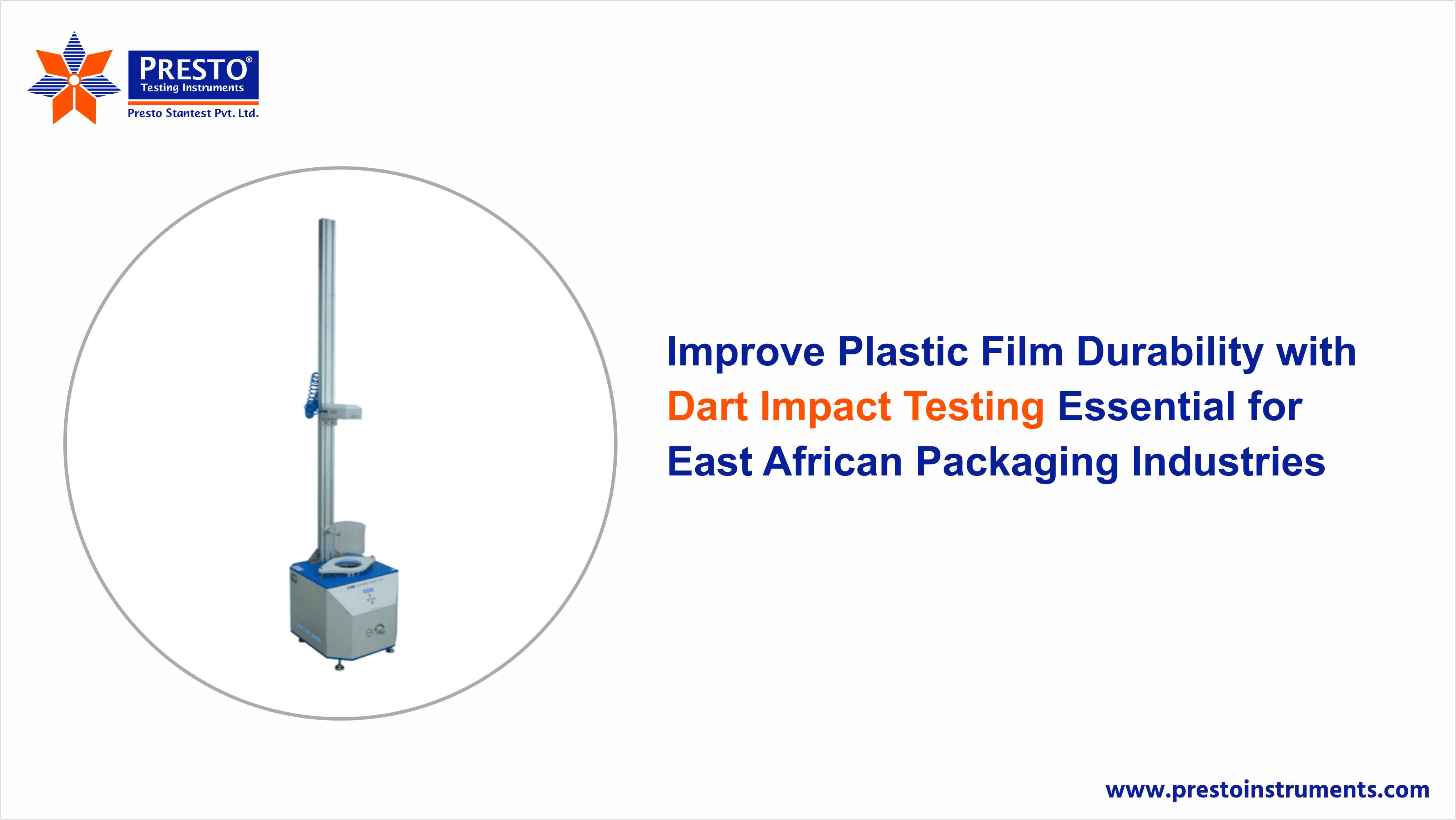
Roads across East Africa can be rough, and long routes create steady stress on plastic film. One small crack can turn into a costly problem. That is why manufacturers pay close attention to impact strength. The dart impact test ASTM D1709 gives a clear idea of how much force the film can withstand before it punctures. A good Dart impact tester in Tanzania helps factories track this strength every day.
More companies across these regions now rely on this test to keep their packaging dependable from plant to market.
The dart impact test for plastic film checks how much impact energy the film can handle before it fails. A weighted dart drops from a set height and hits the film. If the film breaks, the operator adjusts the weight until the breaking point becomes clear. This simple motion reveals the resistance of the film against sudden hits or pressure during transport, stacking, or handling.
The Dart impact tester follows the Dart impact test ASTM D1709 method. This makes the readings dependable for quality checks. It also helps factories compare batches without confusion. Film makers use it to study tear strength, puncture resistance, and overall toughness.
Plastic film moves through long and varied routes across regions of East Africa countries like Sudan, Tanzania & Kenya. Transport may shift from coastal humidity to dry inland heat. Roads may pass through bumpy stretches. Goods may be carried in open trucks, crowded vans, or mixed-load containers.
Any weak film may split open under sudden load or vibration. This leads to product loss, contamination, and customer complaints. Stronger film stays steady, protects the goods inside, and moves through these routes without trouble.
Dart impact testing gives film-makers a clear picture of how the material will behave in real use. When the readings stay high, factories feel comfortable sending the film into production for pouches, sacks, liners, and laminated packs.
Plastic packaging in East Africa faces more hits than anyone notices.
The dart impact test for plastic film simulates this sudden force. It tells manufacturers whether the film can survive quick shocks. Films used for grains, sugar, fertilizers, dairy products, and fresh food move constantly in distribution cycles. If the film lacks impact strength, every cycle becomes a risk.
Filmmakers use this test as part of everyday checks. It helps them choose the right resin blend, set the right machine temperature, and keep the film thickness steady.
Film quality often changes when raw materials vary or when machine settings drift. A line running for long hours may create slight shifts in melt flow, cooling rate, or stretching. These small changes affect puncture resistance.
The dart impact test ASTM D1709 acts like a quiet guard. It alerts the team when a batch falls below the safe strength range. This helps factories fix issues early and avoid large-scale rejections. A dependable Dart impact tester gives the right force readings for every sample.
When the machine stays steady, the film quality stays steady as well.
Most factories use the dart impact test during incoming raw material checks, in-process checks, and final film roll checks. Some plants test every hour when running thin film.
Others follow set intervals during long runs.
This helps in tracking resin quality, spotting weak spots early, supporting long storage and travel conditions, reducing customer complaints and keeping pouch burst failures low.
Film-makers who sell to the food, agricultural, and industrial sectors depend heavily on this test. It keeps their packaging safe for local supply chains and for export shipments leaving for these countries.
Impact strength readings only help when the machine remains accurate. A stable Dart Impact Tester keeps the drop height exact. It offers clear digital readings. It keeps the sample clamping firm. It also prevents operator error through guided steps.
A poor machine may show shifting values. This confuses the quality team and affects production decisions. A good machine solves this by keeping the force application smooth and consistent.
Factories that use a strong machine see fewer film failures during customer use. It brings trust in the testing process and a smoother production flow.
Presto Instruments builds testing equipment that matches the needs of busy production plants. Our Dart impact tester in Kneya, Tanzania & Sudan follows the Dart Impact Test ASTM D1709 with accurate drop systems and clear readings. The design stays simple and user-friendly. Operators can use it with ease, even on packed production days. The machine offers steady clamping, controlled drop motion, and dependable results for every sample.
The machines support film producers (Plastic), converters, lamination units, pouch makers, and industrial packaging suppliers. They help teams maintain strength levels that match market expectations in East Africa.
Conclusion
Plastic film is more than a simple wrapping material. It protects products during long and unpredictable travel. East African countries like Kneya, Tanzania & Sudan rely heavily on plastic packaging to move goods safely from factories to markets. The dart impact test ASTM D1709 in Kenya gives filmmakers a clear look at how well their film can handle sudden shocks.
With a dependable Dart impact tester, industries can keep their film strong, study changes in resin quality, and avoid costly failures. A simple test protects thousands of packs before they move toward customers. It becomes a part of daily production, helping companies keep their packaging safe and steady.
FAQs
Elevate your quality assurance process to new heights
At Presto, we take pride in being Global manufacturers of Laboratory Testing Instruments for different industries.