
06-Apr-2026
Presto Instruments
With the current changes in the plastics industry in Oman that have been instigated by the sustainability efforts and focus on the growth of recycled and biodegradable plastics, the challenge of keeping the material quality constant has become central. In contrast to virgin polymers, recycled plastics tend to be inconsistent in viscosity, contamination, and flow characteristics. Equally, biodegradable polymers are also sensitive to temperature and processing environment, and, therefore, individuals are likely to be inconsistent when they are in manufacturing.
In the absence of adequate consideration, that is, Melt Flow Index Oman testing, manufacturers will run the risk of low product quality, defects in the processing, poor mechanical properties, and the failure to adhere to international specifications. To QA managers and production teams, the correct melt flow index testing machine is to be selected in order to achieve desired consistent processing performance and product.
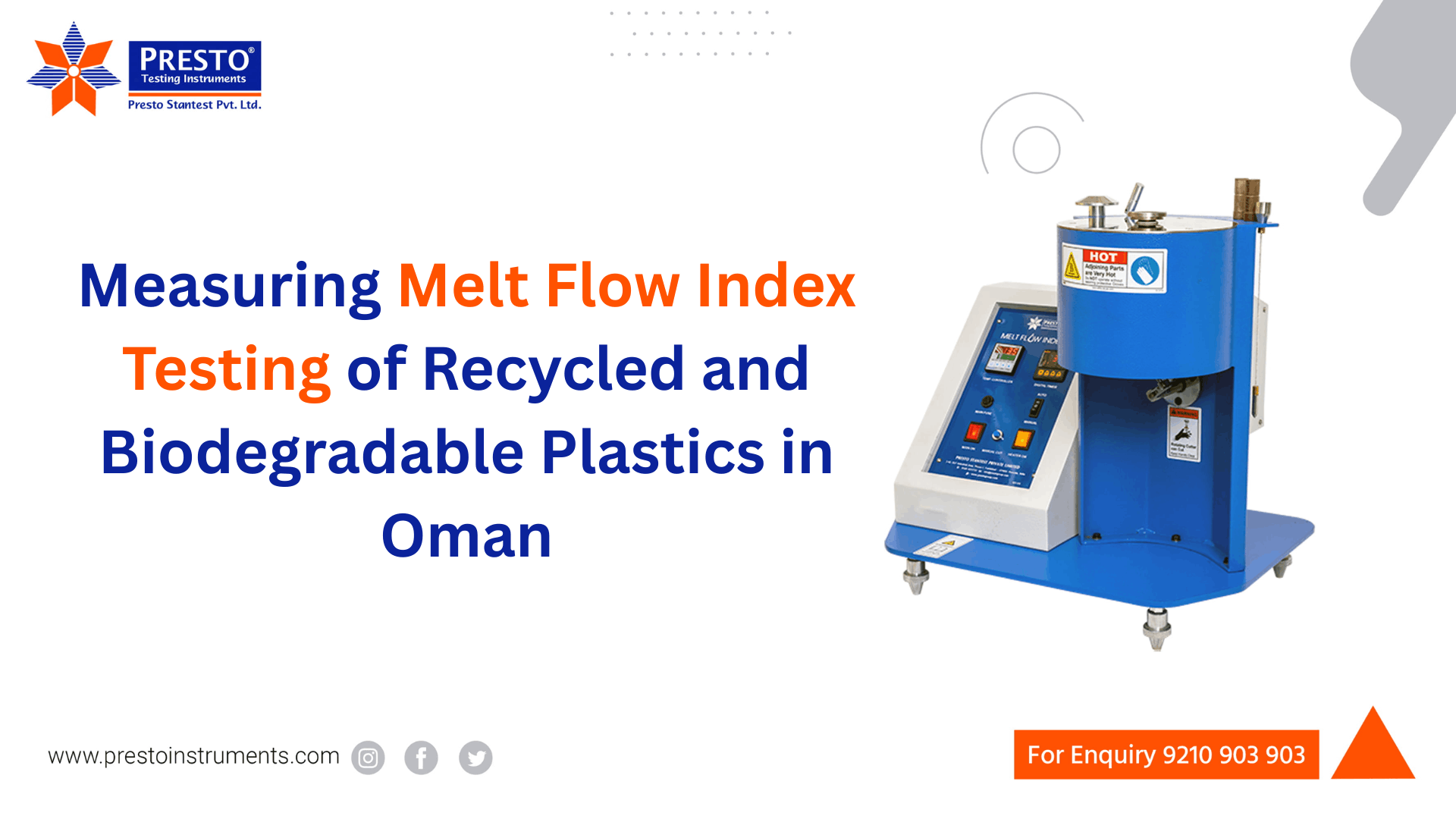
Melt Flow Indexer Oman is the determination of the flow rate of thermoplastic polymers in a melted condition under controlled conditions of temperature and load. This is a test that is used to determine the ease with which a material can flow during processing, i.e., extrusion or injection molding. A melt flow index tester (also called an MFI testing machine or MFI tester) is an instrument that has been used to measure the melt viscosity of polymers.
In the case of recycled and biodegradable plastics, the test is essential, as it is used to determine the changes in the structure of polymer chains, the degree of degradation, and the overall quality of the substance.
1. Material Consistency
Ensures uniform flow behavior across batches, especially for recycled plastics.
2. Process Optimization
Helps set correct processing parameters for extrusion and molding.
3. Quality Control
Detects material degradation or contamination.
4. Compliance with Standards
Meets global testing requirements for plastic materials.
5. Performance Assurance
Ensures final products meet mechanical and functional requirements.
The melt flow index test operates on a standardized extrusion principle:
Step-by-Step Process:
Advanced Functional Insights (from industry practices):
These properties are particularly sought after by biodegradable plastics, in which temperature differentials can have a tremendous effect on flow behavior.
The melt flow index equipment in Oman is modernized in a manner that it can give accurate and consistent results under controlled conditions. These systems also have a high-accuracy temperature control unit that ensures that there is a consistent heating condition that ensures dependable test results. The control systems are based on microprocessors, allowing the control systems to operate precisely; automated timing and cutting mechanisms minimize the human intervention and enhance consistency.
High-tech models are provided with digital screens to monitor the state of the test in real time, as well as solid construction materials to withstand the nonstop work of the laboratory. The inclusion of safety measures is used to guarantee the safety of handling high-temperature products during examination.
Such capabilities give immense benefits, such as precise measurement of the melt flow properties, less reliance on operators, better control of the process, and better product uniformity. Recycled and biodegradable materials can be assessed more effectively by manufacturers, manufacturing processes can be optimized, and the number of defects in finished products can be reduced.
Plastic Recycling business
Measures the condition of recycled polymers and uniformity.
Packaging Industry
Assures good behavior of the flow of film, containers, and molded products.
Automotive Industry
Tests polymer components for consistent processing and durability.
The Pharmaceutical Industry and Medical
Authenticates medical device and packaging polymer materials.
Biodegradable Plastics Sector
Determines the flow performance of environmentally friendly materials in environmentally friendly manufacturing.
To guarantee adherence to the internationally accepted standards, a reputable manufacturer of a melt flow index tester should have the reliability of an index test:
Compliance ensures global acceptance of test results and supports export quality standards.
Understanding failure patterns helps improve material quality:
With high-end MFI tester machines, manufacturers are able to identify these problems at an early stage and optimize the formulations of materials.
Presto Instruments is a reliable manufacturer of melt flow index testers and the manufacturer of high-technology solutions to melt flow index testing in Oman.
Presto Instruments has developed an image of being accurate in design, manufacture, and following international best practices. The company incorporates the latest temperature control features, mechanical strength, and easy interfaces to guarantee consistent and reproducible results in the tests. Through its research and training centers, Presto constantly upgrades its capabilities in its products to match the demands in the industry. It also offers after-sales service, which covers installation, calibration, and training of the operators so that the performance of the product is long-term and the customers are satisfied.
The relevance of proper Melt Flow Index testing in Oman is on the rise, as Oman is heading to sustainable materials and high-technology manufacturing. The acquisition of a high-performance melt flow index test machine helps manufacturers to experience a stable output, lower material inconsistency, and enhance the general efficiency of production.
Presto Instruments offers the best solution to the current-day polymer testing requirements with advanced technology, high reliability of its operations, and strong technical support.
FAQs
There is a fluctuation in the price of the melt flow index tester in Oman based on the features, automation, and specifications. Sophisticated models that have automated cutting and digital controls are more expensive.
It is employed in the determination of molten plastic flow rate, which determines the viscosity of a material and its ability to be covered by the processing.
MFI testing machines are used in industries in quality control of plastics, packaging, automotive, medical, and recycling.
MFI is not a direct gauge of viscosity, and a high MFI gives a lower viscosity and vice versa.
Yes, leading manufacturers like Presto Instruments offer installation, calibration, and training services.
Why Melt Flow Index Testing Is Crucial for Plastic Manufacturers in African Markets?
What is the Difference Between Manual and Automatic MFI Testers?
Top 5 Reasons to Use a Melt Flow Index Tester in Your Quality Lab
MFI Testing in Plastics Industry: Importance, Working, & Advantages
Uses of Melt Flow Index Tester in Paper and Packaging Industry
Elevate your quality assurance process to new heights
At Presto, we take pride in being Global manufacturers of Laboratory Testing Instruments for different industries.