
30-Apr-2026
Presto Instrumentsx`
A peel test is used to validate the strength of two bonded materials. In this test, a peel adhesion tester is used to tear the layers at a constant rate. The machine also notes the force that is required to force them apart. This value reflects the peel bond strength.
The result is more than a single number. It shows the full behavior of the bond during separation. Some materials fail suddenly. Others peel slowly with steady resistance. This discrepancy assists the teams on how the product will act in actual use.
In the case of industries in South Africa, the test has found wide application in packaging, laminates, adhesives, and coated materials whose bonding quality is an absolute parameter in the performance of the product.
Weak bonding may not be realized until there is a failure. A pouch may open during transport. A label may lift in storage. A laminate may separate under pressure.
Peel testing helps catch these issues early. It provides definite information on the strength of seals, the quality of adhesives, and consistency in bonds. This testing is even more significant to manufacturers that deal with export markets.
Buyers expect standards-based reports. A peel adhesion tester assists in fulfilling these requirements and decreases the chances of rejection, return, and brand defamation.
Peel testing is not limited to one method. Various bonding conditions and different types of materials necessitate various test setups. Both procedures are aimed at the simulation of the way the bond will operate in a real-life scenario, and it may be flexible packaging, rigid panels, or gluing.
T peel testing is widely used for flexible materials. In this method, two bonded layers are pulled apart in opposite directions, forming a “T” shape. It works well for laminates, films, and soft-bonded structures where both layers can bend easily.
The 90-degree peel test is used when one surface is rigid. The flexible material is pulled at a right angle from the fixed surface. This method is common in pressure-sensitive labels, tapes, and coatings applied to solid bases.
The 180-degree peel test is another popular method. Here, the material is folded back and peeled directly against itself. This setup provides stable and repeatable readings, especially for thin and flexible materials.
Floating roller peel testing uses a roller to maintain a constant peel angle. This minimizes the variation in the test and provides smoother and more consistent results. It finds application in bond and veneer testing.
Climbing drum peel testing is suited for strong, rigid, bonded panels. The sample wraps around a rotating drum as it peels, allowing accurate measurement of high-strength bonds.
Adjustable angle peel testing offers flexibility. The peel angle may be varied and used to research and develop products by investigating the behavior of materials under various stresses.
Peel testing follows a clear process. Each step affects the final result.
The sample must be cut evenly. Bonding should be uniform. Size and dimensions must follow standard methods. Any variation at this stage can affect accuracy.
The sample is fixed between grips. The peel tester pulls it at a constant speed. The force is recorded continuously during separation.
Peel strength shows how much force is needed to separate the bond. Adhesion performance shows how the bond behaves during the test. Both values help understand real working conditions.
Peel testing is guided by well-accepted global standards. These standards explain the way the test will be conducted and the way results are to be documented. They assist labs in going through the same procedure; hence, the results remain consistent and can be easily compared.
Examples of common standards are ASTM F88 on seal strength.
These guidelines aid in achieving consistency and comparing various labs and regions.
Each standard clearly defines sample size, test speed, test conditions, and reporting methods, which helps produce consistent and trusted test results.
The choice of test depends on the material and its use.
Selecting the correct method helps produce meaningful and comparable results.
The primary method of testing in a peel test is the measurement of the push-off force required to separate bonded layers with the help of a peel adhesion tester. Grips or clamps are applied to the sample, making it stay still throughout the test. A load cell is used to capture the applied force with accuracy.
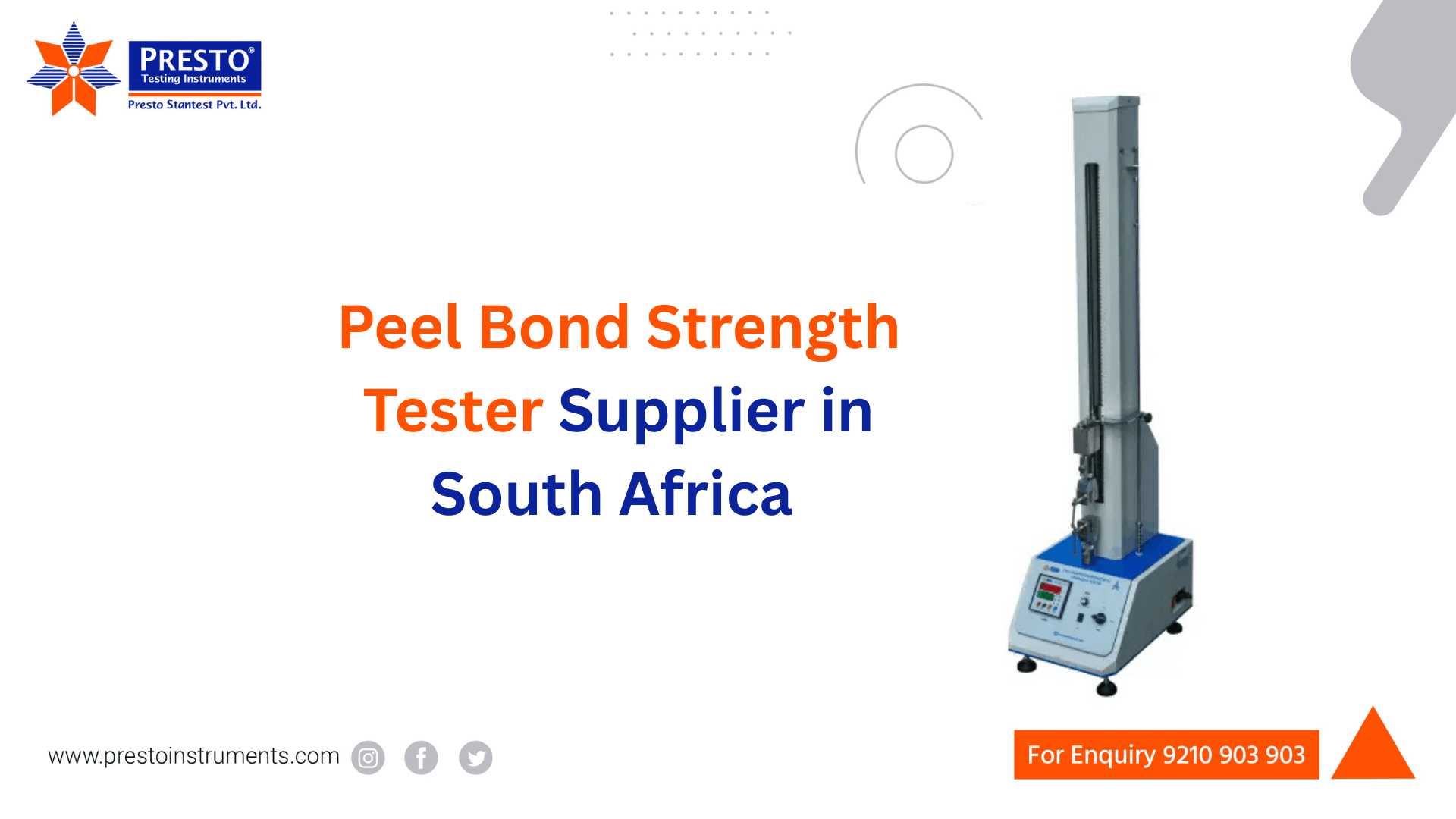
Software records the data and displays the results for analysis. Modern systems come with digital controls, allowing users to set speed and test conditions easily. They also store test data for future reference. These characteristics assist in upholding uniformity and minimizing variation and offer transparent and reliable results in the course of a test. Peel Tester Computerised Cum Digital machine you can use for peel bond strength test for automatically calculated data report.
Test results include several values.
Jumps along the curve can be a hint of flaws. Smooth curves suggest stable bonding. This data helps engineers adjust production settings.
Different accessories are used based on the material.
Proper selection of accessories will enhance consistency, minimize slip, and provide more reliable test results.
Peel testing can be affected by several factors.
It is also important to have the peel tester regularly calibrated. Without it, readings may drift over time.
Peel testing is used across many industries in South Africa and global markets.
In all these applications, a peel adhesion tester helps maintain product quality and consistency.
FAQs
1. What is the peel bond strength tester price in South Africa?
The price varies based on machine accuracy, features, and automation level. Basic models cost less, while advanced digital systems with software and data logging cost more. Import charges may also affect pricing.
2. Who is a trusted peel tester manufacturer for South Africa?
Manufacturers like Presto Instruments are widely used by global industries. They offer precise machines along with calibration support and technical guidance for export-oriented testing needs.
3. Where can I test samples before buying a peel tester?
Samples can be tested at Presto Instruments labs. Buyers can request demo testing to check the machine’s performance and suitability for their materials.
4. What are the criteria for testing peel adhesion?
Common standards include ASTM F88, ASTM D903, ASTM D1876, ISO 8510, and TAPPI T494. These define test methods, speed, and result reporting.
5. What is the frequency of calibration of a peel adhesion tester?
Calibration is typically annual or a function of the frequency of use. Calibration aids in correct and steady results.
6. What are some of the industries that require the equipment of a peel bond tester?
Peel testers are applied in industries like packaging, pharmaceuticals, automotive, electronics, and labels to test bonding strength and quality of the products.
7. What to do to get in touch with Presto Instruments?
You may reach Presto Instruments via response@prestogroup.com or phone number +91 9210903903 to have product details and pricing, as well as technical advice.
Elevate your quality assurance process to new heights
At Presto, we take pride in being Global manufacturers of Laboratory Testing Instruments for different industries.